

Microtome blades are used in microtomes to cut thin slices, or sections, of biological tissue samples for microscopic examination. These slices are typically less than 50 micrometers thick and are utilized for a variety of critical purposes, including histological analysis, tissue culture, and electron microscopy.
The use of precision cutting blades allows for absolute control over the thickness and orientation of the tissue sections, ensuring that the samples are highly consistent and accurately representative of the tissue as a whole. This is a vital requirement for achieving accurate and reliable results in both scientific research and diagnostic testing.
General Cutting Blade Types for Microtomes
There are several types of microtome blades designed to perfectly section specific samples for microscopy. Some of the most common types include:
-
Straight blades: These blades have a straight edge and are primarily used for making thin, uniform sections of soft tissues, such as brain tissue specimens.
-
Curved blades: Featuring a curved edge, these are used for making thicker sections of hard tissues, such as bone or teeth.
-
Serrated blades: These blades have a saw-toothed edge and are ideal for cutting through tough or highly fibrous tissues, such as cartilage, muscle, and the dermis.
-
Diamond blades: Made of industrial-grade diamond, these are used for cutting through incredibly hard tissues, such as bone or teeth.
-
Cryostat blades: These are designed specifically for use with a cryostat, a specialized instrument used for cutting frozen tissue samples.
-
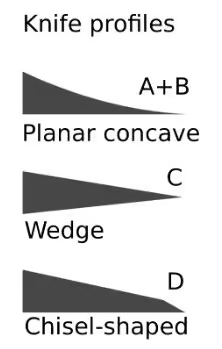
Beveled blades: These blades have an sharply angled edge and are used for making precise, angled cuts through tissues.
In general, the type of blade used will heavily depend on the specific physical properties of the tissue being sectioned and the desired thickness of the final sections.
Ceramic Cutting Blades
Ceramic blades are advanced cutting tools made from ceramic materials, such as zirconia or alumina. They are well-known for their extreme hardness and wear resistance, as well as their unique ability to maintain a sharp edge for an extended period of time. These structural properties make ceramic blades highly suitable for a wide range of cutting applications, including machining, slicing, and dicing.
One of the main advantages of ceramic blades is their ability to smoothly cut through hard and abrasive materials with minimal wear and tear on the blade itself. They are highly resistant to corrosion and can withstand high temperatures, making them perfectly suited for use in harsh environments. Additionally, ceramic blades are often lightweight and feature a lower thermal expansion coefficient than standard steel blades, which can drastically improve overall cutting precision.
Ceramic blades are commonly used in microtomes for sectioning tissue samples for microscopy. While they are also used in other demanding applications—like food processing and metalworking—they are generally more expensive than steel blades and may be more prone to breaking under incredibly rough conditions.

Tungsten Carbide Cutting Blades
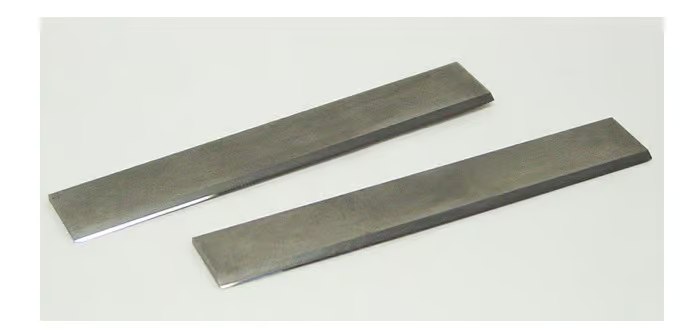
Tungsten carbide blades are cutting tools made from a robust composite material consisting of tungsten and carbon atoms. These atoms are bonded together to form a crystalline structure that is extremely hard, durable, and highly wear-resistant. Tungsten carbide blades are utilized in a wide range of intense cutting applications, including machining, slicing, dicing, and grinding.
These specialty blades are known for their ability to easily cut through hard and abrasive materials with very minimal wear. They are highly resistant to corrosion and boast a high melting point, making them ideal for use in harsh environments and elevated temperatures. Furthermore, tungsten carbide has excellent thermal conductivity, which actively helps to dissipate heat and prevent blade overheating during the cutting process.
Tungsten carbide blades are commonly used across the manufacturing, construction, and scientific research industries. While they are generally more expensive than traditional steel blades, their incredibly long lifespan and unique ability to cut through tough materials make them a highly cost-effective choice for many laboratory applications.
Final Thoughts: Choosing the Best Blade for Your Lab
There are several types of microtome blades available, each purposefully designed for use with specific types of tissues and for producing sections of exact thicknesses. The choice of blade will always depend on the properties of the tissue being cut and the required parameters of your experiment.
At Precisionary Instruments, we generally recommend:
-
Stainless steel cutting blades for soft tissue specimens like acute brain samples.
-
Ceramic and tungsten carbide blades for more fibrous tissue specimens, or tissue samples with extensive vasculature (this includes cutting sections of tumors).
If you have any questions about which cutting blades would be best suited for your laboratory’s specific experiments, please don’t hesitate to reach out to us!