Category: Publication Highlights
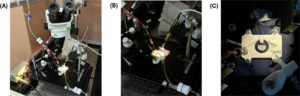
Key Takeaways Byun et al. designed a fully 3D-printed recording chamber system for acute brain slice electrophysiology — a submerged chamber, tissue-positioning stage, and suction assembly — built for roughly $1.23 in material cost versus the thousands of dollars commercial systems typically require. Thermal imaging and thermistor testing confirmed uniform perfusate distribution and rapid, stable […]
Written by Abby Chu on October 27, 2026
Key Takeaways IL-33 increased airway contraction and blunted the relaxation response to the rescue bronchodilator formoterol in non-diseased human lung tissue, suggesting it can impair bronchodilator effectiveness independently of inflammation. IL-25 selectively increased airway contraction in asthma-derived tissue but had little effect in non-diseased tissue, pointing to a disease-specific vulnerability. TSLP did not significantly alter […]
Written by Abby Chu on September 16, 2026
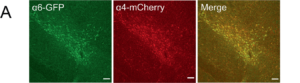
Key Takeaways The tail striatum (TS) is a poorly understood brain region linked to sensory processing, and its medium spiny neurons (MSNs) have never been characterized electrophysiologically in depth — until now. TS-MSNs are electrophysiologically distinct from dorsolateral striatum (DLS) MSNs, with more depolarized resting potentials, lower rheobase, and stronger spontaneous excitatory input. The three […]
Written by Abby Chu on September 16, 2026
Key Takeaways Two doses of psilocybin administered before chemotherapy prevented peripheral neuropathy in mice for up to eight months, without impairing the anti-tumor efficacy of the chemotherapy itself. The neuroprotective effect required serotonin 2A receptor activation but not the drug’s hallucinogenic properties. A nonhallucinogenic 2A agonist worked equally well, opening a practical path to clinical […]
Written by Abby Chu on September 14, 2026
Key Takeaways Kv3.1b potassium channel expression increases substantially in the dorsal cochlear nucleus (DCN) of mice after the onset of hearing, but this upregulation does not explain why individual action potentials become shorter and faster during development. Instead, increased Kv3.1b expression specifically supports the ability of DCN fusiform neurons to sustain high-frequency firing,a capacity critical […]
Written by Abby Chu on September 14, 2026
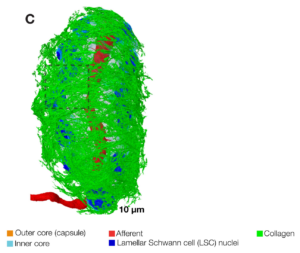
A new study from Yale University, published in Science Advances (Ziolkowski et al.), overturns a decades-old model of how the Pacinian corpuscle, the receptor responsible for detecting transient touch and high-frequency vibration in skin, actually works. Led by Elena Gracheva and Sviatoslav Bagriantsev, the team used the Compresstome to prepare tissue for high-resolution electron microscopy, […]
Written by Abby Chu on August 26, 2026
Key Takeaways Synthetic cooling agents WS-3 and WS-23 — widely used as menthol substitutes in e-cigarettes — significantly enhance nicotine self-administration behavior in mice, matching the reinforcing effects of menthol itself. These coolants boost dopamine release in the nucleus accumbens core, increase the excitability of dopamine neurons in the ventral tegmental area, and amplify nicotine-induced […]
Written by Abby Chu on August 17, 2026
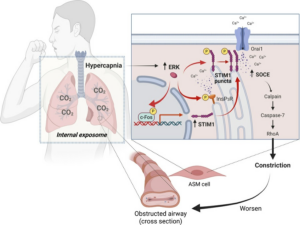
Key Takeaways Elevated CO2 (hypercapnia), common in advanced COPD, actively drives airway smooth muscle constriction rather than simply being a downstream symptom of disease severity. Hypercapnia activates ERK, which triggers calcium release and boosts STIM1 expression, amplifying calcium signaling that drives airway smooth muscle contraction. Precision-cut lung slices, prepared on a Compresstome tissue slicer, confirmed […]
Written by Abby Chu on August 10, 2026
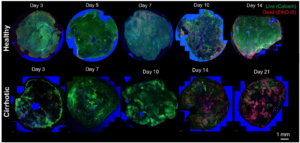
Key Takeaways A new study from Beth Israel Deaconess Medical Center (BIDMC) and Harvard Medical School, generated with Precisionary’s Compresstome vibrating microtome, extends viable human precision-cut liver slice (PCLS) culture to 10 to 14 days, far beyond the field baseline where fewer than 7% of published PCLS studies maintain culture past 72 hours. During extended […]
Written by Abby Chu on August 5, 2026
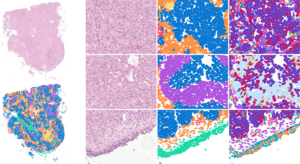
Key Takeaways Researchers profiled how SMARCB1-deficient sinonasal carcinoma responds to drugs directly in patient tumor tissue, preserving the spatial architecture rather than dissociating the sample. Live tumor slices were generated on a Compresstome tissue slicer, producing uniform, viable sections suitable for ex vivo drug exposure. Drug responses varied across distinct regions of the same tumor, […]
Written by Abby Chu on July 27, 2026