
Tag: compresstome

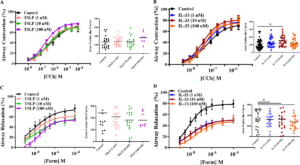
Publication Highlight: How Alarmins Reshape Airway Tone in Human Small Airways

Key Takeaways IL-33 increased airway contraction and blunted the relaxation response to the rescue bronchodilator formoterol in non-diseased human lung tissue, suggesting it can impair bronchodilator effectiveness independently of inflammation. IL-25 selectively increased airway contraction in asthma-derived tissue but had little effect in non-diseased tissue, pointing to a disease-specific vulnerability. TSLP did not significantly alter […]
Written by on September 16, 2026

Publication Highlight: Mapping the Electrophysiology of the Tail Striatum with Riley et al.

Key Takeaways The tail striatum (TS) is a poorly understood brain region linked to sensory processing, and its medium spiny neurons (MSNs) have never been characterized electrophysiologically in depth — until now. TS-MSNs are electrophysiologically distinct from dorsolateral striatum (DLS) MSNs, with more depolarized resting potentials, lower rheobase, and stronger spontaneous excitatory input. The three […]

Written by on September 16, 2026

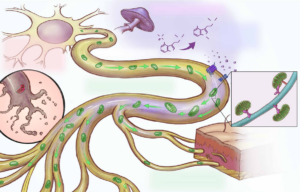
Publication Highlight: Psilocybin Prevents Chemotherapy-Induced Neuropathy by Preserving Mitochondrial Trafficking

Key Takeaways Two doses of psilocybin administered before chemotherapy prevented peripheral neuropathy in mice for up to eight months, without impairing the anti-tumor efficacy of the chemotherapy itself. The neuroprotective effect required serotonin 2A receptor activation but not the drug’s hallucinogenic properties. A nonhallucinogenic 2A agonist worked equally well, opening a practical path to clinical […]

Written by on September 14, 2026

Publication Highlight: How Kv3.1 Channels Shape High-Frequency Firing in the Developing Auditory Brainstem

Key Takeaways Kv3.1b potassium channel expression increases substantially in the dorsal cochlear nucleus (DCN) of mice after the onset of hearing, but this upregulation does not explain why individual action potentials become shorter and faster during development. Instead, increased Kv3.1b expression specifically supports the ability of DCN fusiform neurons to sustain high-frequency firing,a capacity critical […]

Written by on September 14, 2026

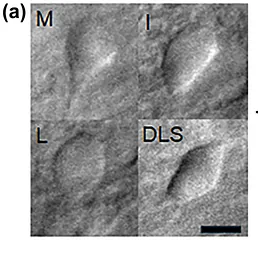
Publication Highlight: Mapping the Pacinian Corpuscle’s Touch-Sensing Architecture with the Compresstome

A new study from Yale University, published in Science Advances (Ziolkowski et al.), overturns a decades-old model of how the Pacinian corpuscle, the receptor responsible for detecting transient touch and high-frequency vibration in skin, actually works. Led by Elena Gracheva and Sviatoslav Bagriantsev, the team used the Compresstome to prepare tissue for high-resolution electron microscopy, […]

Written by on August 26, 2026

Publication Highlight: Human Liver Tissue Viability Extended to 14 Days with the Compresstome Vibratome

Key Takeaways A new study from Beth Israel Deaconess Medical Center (BIDMC) and Harvard Medical School, generated with Precisionary’s Compresstome vibrating microtome, extends viable human precision-cut liver slice (PCLS) culture to 10 to 14 days, far beyond the field baseline where fewer than 7% of published PCLS studies maintain culture past 72 hours. During extended […]

Written by on August 5, 2026

Advanced Techniques for Kidney Tissue Sectioning

From precision-cut slices to spatial multi-omics: how modern renal research cuts and reads kidney tissue Kidney tissue sectioning has moved well beyond the microtome and glass slide. As renal research shifts toward models that preserve living, multicellular architecture, the way we cut and maintain kidney tissue has become a scientific variable in its own right. […]

Written by on August 4, 2026

Which Buffer Solution Should You Use? A Guide for Tissue Sectioning Applications

Formulas and rationale for live sectioning of brain, heart, lung, liver, organoids, and tumors There is no universal buffer. Start from six requirements every sectioning buffer shares (isotonic ~300 mOsm, pH 7.3 to 7.4, balanced ions, glucose, oxygenation, ice-cold), then add tissue-specific protectants. Brain: carbogen-bubbled aCSF; switch to an NMDG- or sucrose-substituted aCSF for cutting […]

Written by on July 30, 2026

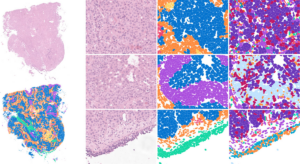
Publication Highlight: Unmasking Treatment Vulnerabilities in a Rare Sinonasal Cancer Through Spatial Profiling and Ex Vivo Drug Testing

Key Takeaways Researchers profiled how SMARCB1-deficient sinonasal carcinoma responds to drugs directly in patient tumor tissue, preserving the spatial architecture rather than dissociating the sample. Live tumor slices were generated on a Compresstome tissue slicer, producing uniform, viable sections suitable for ex vivo drug exposure. Drug responses varied across distinct regions of the same tumor, […]

Written by on July 27, 2026

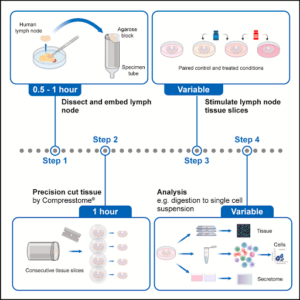
Publication Highlight: Dr. Joannah Fergusson’s Breakthrough in Modeling Immune Responses Ex Vivo

At Precisionary Instruments, our ultimate goal is to support scientists throughout their careers and we absolutely love following them as they become successful in their respective fields. There is nothing more rewarding than partnering with brilliant minds, watching their projects evolve, and celebrating their monumental milestones. Today, we are thrilled to shine a Lab Spotlight […]

Written by on May 22, 2026